Monday, November 27, 2006

Traditional Food Packaging

I was at the Ayer Rajah Food Centre yesterday afternoon when I spotted a Fried Hokkien Prawn Noodle stall selling their noodle wrapped in opeh leaves. I have not seen this for ages and so I promptly bought a packet even though I wasn't hungry.


In our kampong days, most food were packaged in leaves. The most popular were the banana leaf, the simpoh air leaf and opeh leaf. Others included the coconut and pandan leaf. Whilst banana leaf is still quite commonly used today for foods like nasi lemak and otah the other two are quite rare. In the old days, banana leaves were often used to hold slabs of tofu in the market. But they seemed to have stopped this practice.


The Simpoh air (also spelt ayer) leaf was also known as the te-bak-heok or 'pork leaf' in Hokkien, according to my friend Chuck. In the old days, so he claims, pork was often sold in the markets wrapped in this leaf. Frankly, this fact is new to me. I only remember it being used to pack rojak and chee cheong fun. They would fold the leaf into a conical cup shape and hold the edges together with a tooth pick. In my kampong, there used to be a rojak stall at the coffee shop opposite our house. As a kid, I enjoyed watching the hawker prepare the rojak. As for chee cheong fun, every time I eat this snack, I think of our kampong days. Sometimes, we would tell the hawker; "si yao suk yao" in Cantonese, meaning we do not want the sweet sauce; just plain light sauce and oil will do. Of course, we wanted lots of sesame seeds sprinkled on it.


I do not know why this leave is no longer used nowadays. There are so many such plants all over our island. Chuck thinks that it is because of cost. I suspect it is due to hygiene reasons. I hope somebody can enlighten us.


As for the Opeh leaf, it is often used to wrap takeaway fried foods like kuey teow, carrot cake and also chui kueh. I really miss this particular style of packing. Nowadays they use waxed paper like the one below. Somehow, fried kuey teow seems to taste better when wrapped in opeh leaf. I read here that the leaf infuses its contents with a subtle, woody fragrance that enhances its taste. No wonder the hawker who sold me the hokkien noodle told me to wait about 15 to 20 minutes before eating it. In any case, because our sense of smell is associated with memory, the smell of the opeh leave brings back fond memories of our kampong days and adds to the eating experience. The hawker also told me that he got his supplies from Indonesia. He complained that it was quite expensive, each piece costing 40 to 45 cents.
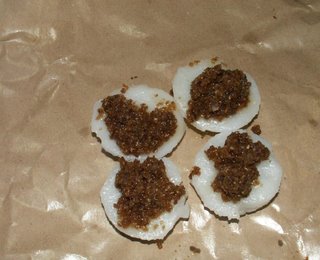

As for the fire for frying, of course nowadays, they use gas cookers. But I have been told that kuey teow fried with wood fire tastes better. I wonder if there is any truth or merely psychological.

In the picture above, the hawker had used a rubber band to bind the packet of noodles. In the old days, they used a kind of reed or straw to tie the packet. No plastic bags were issued. You just hook your finger around the loop and carried the packet. I remember those happy evenings when my father bought back packets of fried hor fun dangling from his fingers this way. I believe this same type of reed/straw was used to tie bak changs (rice dumplings) but of course these days, it is replaced by a raffia string.

In addition to the use of leaves for packaging, paper was often used to wrap food. The most common of course was newspaper, which wasn't very healthy I suppose. The other one that comes to mind is the exercise book pages which was used to pack kacang puteh.

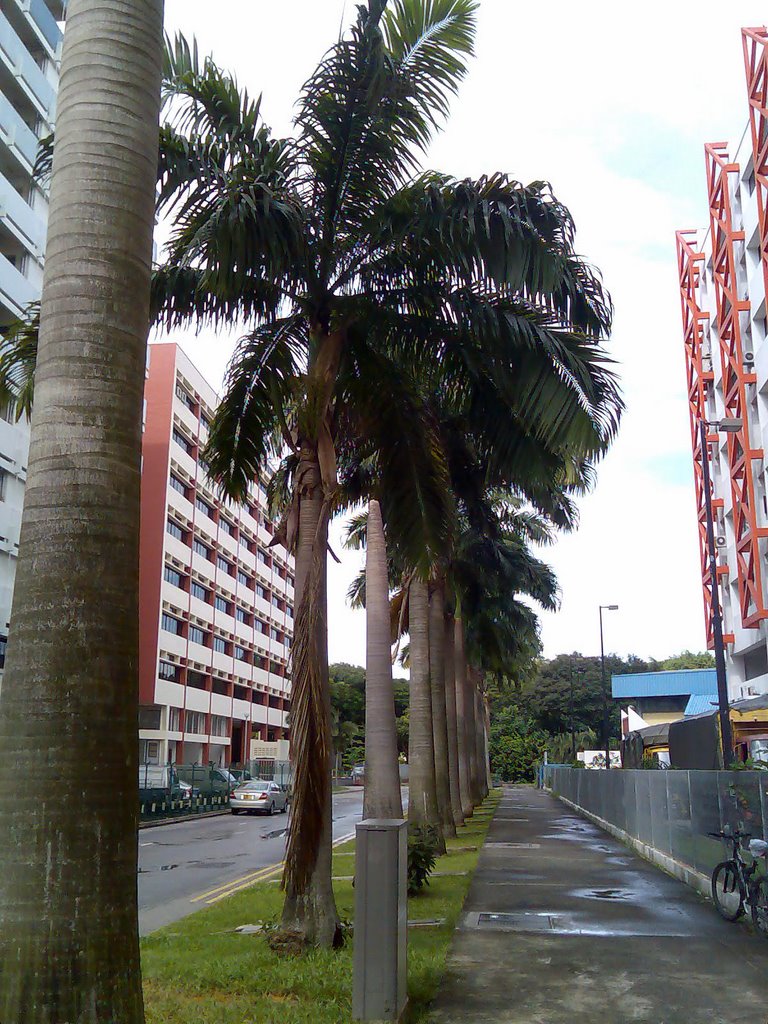
These dead leaves from the row of palm tree outside my office block certainly look like the opeh; but I don't suppose they are they same, are they?

Why Seniors Should Blog

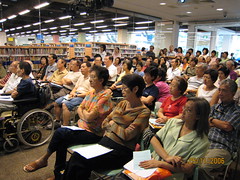
Yesterday, myself and Ivan, another Friend of Yesterday.sg, gave a talk about blogging to a group of more than 100 senior citizens at the Queenstown Community Library. We want to thank the participants for their warm response and we do apologise for any shortcomings in our presentations.

As Ivan and two other 'Friends of Yesterday.sg', Victor and Walter have already blogged about this event (
here, here and here) I will not go into the details again. What I would like to do instead, is to report on what I covered in my presentation.

IMG_0386

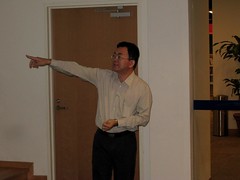
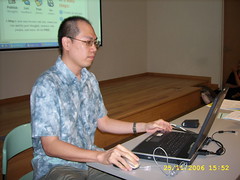
The aim of our talk was basically to encourage the seniors to take up blogging as a means of sharing their stories of Singapore's past. My part was to share my own experience, as one of the oldest bloggers in Singapore in starting Good Morning Yesterday, whilst Ivan gave a demonstration on the basics of blogging.

Essentially I touched on four points.

1) Why I started Good Morning Yesterday
2) The Stuff I blog about
3) The challenges I faced in blogging
4) The satisfaction I derived from blogging.

SPA52830
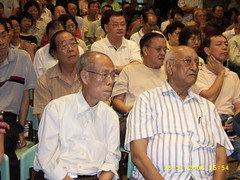
These 2 senior gentlemen arrived half an hour before the commencement time and sat in the front row.


I also spoke about why seniors should blog.

1) We have more stories to tell.

In his 2006 National Rally Speech, Prime Minister Lee Hsien Loong exhorted senior members of our society to share their stories with the young. "Keep alive the Singapore story", he said, "Celebrate our heroes and remember the good times and hard times we’ve been through together ... Our young generation need to know the heart of the Singapore story and understand how we got here ... Parents and grandparents play an important role. You provide the links to our past. Pass down the stories, emotions, and values to your children and grandchildren."

I say, what better way to do this than through blogging. As Kenneth Pinto, another Friend of Yesterday.sg, put it so succintly in his blog, "The personal is powerful. The personal is as valid a history as any textbook, perhaps even more so."


2) We, at least some of us, have more time.

3) We can write better. Most of us have decades of experience in expressing ourselves in English. Many have gone through the old fashioned but tested rigours of learning English, and are more disciplined in its proper usage.

4) Blogging is good for our brains. Health experts have found that exercise is the best way to keep our brains healthy and beat back the effects of ageing. Blogging involves the exercise of the brain in 3 ways. Firstly, writing is a strenuous mental exercise. So is digging up all those memories of long ago events. And it involves learning many new things with the computer and internet.

5) Bloggin is "cool". It helps us to connect with the younger generation. It helps to bridge the so called 'digital divide'.

6) Everyone's doing it. So why not we seniors.

7) It's Fun. After more than a year of doing it, I can testify to that.

8) It can even be profitable. It is not unkown for bloggers to make some money through advertisement and sponsorships on their blogs ... well maybe not much in a small country like Singapore, but who can tell.

IMG_0391


SPA52829

I concluded my section by asking the participant to do at least one of the following 3 things. If possible, start your own blog and post your stories there. If that is too much of a hassle, then send your articles to Yesterday.sg or Good Morning Yesterday and we will gladly publish it for you on our blogs, as what I have been doing for some of my friends. At the very minimum, visit our blogs and share your short stories and annecdotes in the comments section.

Friday, November 24, 2006

A Story Our Mother Told Us

I heard some discussion on radio 938Live this morning about family values and filial piety and that sort of thing. I am reminded of a story my brother, Chun Chew posted in the comments section of one of my earlier posts about Cheng Meng. In case some of you missed it, I reproduce it here.

Tomorrow I am giving a talk to the senior citizens at Queenstown Library about blogging. I intend to tell them that one of the aims of this blog is to educate the young about Singapore of yesteryears. I guess no harm in sneaking in a bit of moral education.


Once upon a time, there was this unfilial farmer who often beat up his aged mother at his whim and fancy, especially when she brought his lunch (food) to him late.

One day the farmer saw a mother goat suckling her kid. The baby kid had to kneel down in order to suckle the milk from her. This incident made him reflect on his atrocious behavior towards his mother. So when his mother came to serve him lunch the next day, he rushed forward, this time thinking of assisting her. The mother on seeing her son running towards her, mistakenly thought that the son was again going to beat her up for being late, panicked and fell into a pond, and drowned. The farmer was so remorseful over his misdeed that he mourned over his mother's grave for three years.

The moral of the lesson is that we should be filial while our parents are alive and not to regret after their passing. Here's our mother's favourite quote:

树欲静而风不止,

子欲养而亲不在.

- Confucius


"Honour thy father and thy mother: that thy days may be prolonged upon the land ... " - The 5th Commandment, Exodus 20:12

Thursday, November 16, 2006

Places I Remember (4) – Lorong Chuan

Last week, I was rummaging through my old things, searching in vain for my father’s birth certificate and citizen certificate to donate to the National Heritage Board. But to my delight, I found 2 long-lost photographs of Lorong Chuan where I grew up in. These photos are especially valuable as they are amongst the few that do not have people posing for the camera. As I have explained before, in the old days, it was considered a waste of film to take pictures of places and things.
And so I take this opportunity to tell you a little about what Lorong Chuan was like in the 1960’s. I hope some of the residents living in the many HDB apartments and private condominiums along Lorong Chuan, as well as the children at the St Gabriel’s Primary School are reading this blog. The younger ones would be surprised to see what Lorong Chuan was like in the 1960's

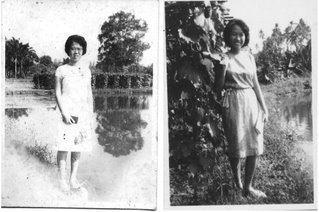
Did you know that Lorong Chuan was quite picturesque in those kampong days? Of course it was surrounded by mainly farmland then. There was one particular stretch close to where the present St Gabriel’s Primary School stands, where there were some ponds. At the edge of the ponds were rows of trellises covered with climbers like cucumbers and gourds. In Cantonese, we called them ‘chit kua pang’. It was quite beautiful really. There was a certain rustic charm alike to those you sometimes see in old Taiwanese romantic movies. And so, when we bought our first camera, a Kodak Brownie camera, we headed down to this place to take some photos which I will share with you here.

Left – My sister Pat, aged around 17 or 18. Can you see the rows of trellises and some palm trees in the background. Right – Siew Tin, her best friend from Cedar Girls School. Would you believe after more than 4 decades, they are still in contact with each other. Indeed, blessed are the ties that bind.

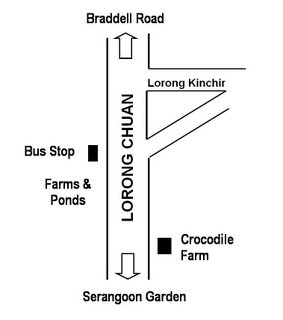
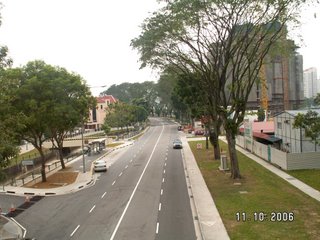
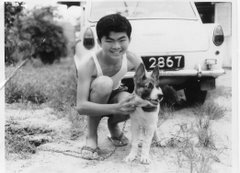
On the left is the same bus stop where our dog Napie was knocked down and killed by a car. Directly facing this bus stop was one of two dirt tracks that led to our kampong, Lorong Kinchir. As you can see from this photo taken last month, there is some construction going on. No doubt another condo project ….. sigh.


Another notable landmark along Lorong Chuan was the crocodile farm where they slaughtered crocodiles for their skin. The stench from the farm was quite strong and well-known to the nearby residents and passers-by. In fact, when I was interviewed on the 938 FM Breakfast Show earlier this year, the host, Mr Keith De Souza asked me if I could remember this place when he heard that I used to stay at Lorong Chuan. Apparently, he used to live at Serangoon Garden.

Further down, on the opposite of the road was another dirt track called Plantation Avenue. We only got to know this place when my eldest brother, Chun Chew got to know a pretty lass from this kampong ….. who later became my sister-in-law. I don’t think I am permitted to reveal more details. I was surprised to learn that a short stretch of Plantation Avenue is still exists today.

The land on which we stayed was acquired by the government and we moved out of the area in 1974. But some of our neighbours were more fortunate. They sold their land to private developers at a much higher price. One of the new buildings that emerged was the Timex Factory. I believe it was later renamed Newton Factory. Today, it is occupied by a spanking industrial complex called New Tech Park.

Related Posts:

Places I Remember: Serangoon Garden
My Kampong Best Friends
Our Kampong

Friday, November 10, 2006

Horses, Camels and Other Animals – Chuck Hio

crazyhorse

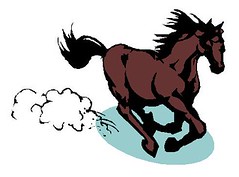
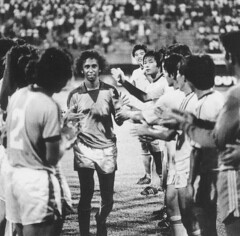
Mention Crazy Horse and the younger generation will think of the topless cabaret show at Clarke Quay. But mention Crazy Horse to the 'laodies' (‘lao’ as in 老, meaning Old, a term coined by Chun See’s naughty daughter) like Adrian, Chun See, Peter or Chun Chew, and immediately they think of the Malaysia Cup soccer matches at the National Stadium in the 1970's.

Yes, those days were the prime of Singapore’s soccer craze and every match had the stadium filled to capacity. The most well-treasured match was the one between Singapore and Penang in 1977 which attracted a capacity crowd of 70,000, and which we won by the score line of 3-2 in extra time.

During that time, tickets were sold on match day and I went with my brother and another friend. We paid for tickets at the entrance. But it was really shocking to see so many people all pushing one another to get in. In the end, we entered the stadium without paying as it was complete mayhem. I will always remember the sight of the pile of slippers, sandals and shoes near the entrance. Many supporters actually took off their footwear and climbed into the stadium via the pillars!!! After that incident, the stadium authorities put up barbed wires around those pillars.

Anyway, I do not intend to try and describe the experience of watching one of these games live. But I just want to share with you some of the famous and funny names of those days; Let's see now ... there was;


  1. Nasir Jalil better known as The Crazy Horse, or Siow Bay in Hokkien; and also known as the Super Sub. He was famous for running about for nothing but scored a crucial goal in a final.
  2. Rajagopal, our defender who was famous for his banana (corner) kicks and galloped confidently down the flanks. He was known as The Camel.
  3. Dollah Kassim was known as the Gelek King because of his feints with which he was able to shake of his defenders before scoring.

  4. Quah Kim Song was known for his bursts of speed.

  5. Mohd Nor was the handsome one and known for his style and grace. He married the gorgeous singer Rahimah Rahim.

  6. Seak Poh Leong, the captain was notorious at penalty kicks; some called him “Sack” Poh Leong.

  7. Leong Kok Fann, another speedster, was effective coming in at half time.

  8. Goal keepers: Lee Bee Seng had good anticipation & catching shots at high crosses. Edmund Wee was short but good at saving penalties, especially grounders.

  9. And many other well-loved names like Robert Sim (The Tank), Hasli Ibrahim (hard tackler), Samad Alapichay (uncompromising) chest-out, and Malek Awab, short midfielder, speedy, good turning, a team player.


  10. Dollah Kassim

On the Malaysian side (These guys seemed to perform extra well whenever they do battle with Singapore.), we had:

  1. Arumugam, The Spider, the goalie of Selangor – he had the reputation of having arms that reached below his knees; all eight of them.

  2. Soh Chin Aun the captain of Malacca was known as The Towkay.


The most memorable goal was Ashad Khamis’ 35 meter goal that caught the goal keeper sleeping. Can't remember which match.

But the man we loved most in any match was the referee. The poor guy got booed every time he made a decision against Singapore and everyone loved to chant Referee Kayu, Referee Kayu (for foreign readers .. kayu is Malay for wood). The other guy we loved to hate was the linesman - Linesman Bodoh, Linesman Bodoh (Bodoh is stupid in Malay) was our favourite chant.

But any trip down the Malaysia Cup memory lane is incomplete without mentioning our most beloved commentator, Brian Richmond. His collection of unique and colourful expressions include:

  • “It was raining cats and dogs”.

  • “The defence was in sixes and sevens”,

  • “He put his big boot to the ball”, and my all-time favourite,

  • “He plucked the ball out of the air like a bunch of ripe rambutans”.


Disclaimer: I am not responsible for the misleading title of this article. The owner Chun See responsible for that one.